

Pouring a slab, foundation or columns? Concrete mixer hire in Kigali saves you buying a machine you only need for a few days, and gives far more consistent concrete than hand mixing on the ground. We deliver the mixer to your site, show your team how to use it safely, and collect it when the job is done.
Mixer options
| Mixer | Best for | Notes |
|---|---|---|
| Small drum mixer | Repairs, small pours, steps, plaster and screed batches | Easy to move around site |
| Diesel concrete mixer | Foundations, columns, beams and house slabs | Works without mains power |
| Mixer with operator | Slab pours where speed and consistency matter | An experienced hand keeps the mix right |
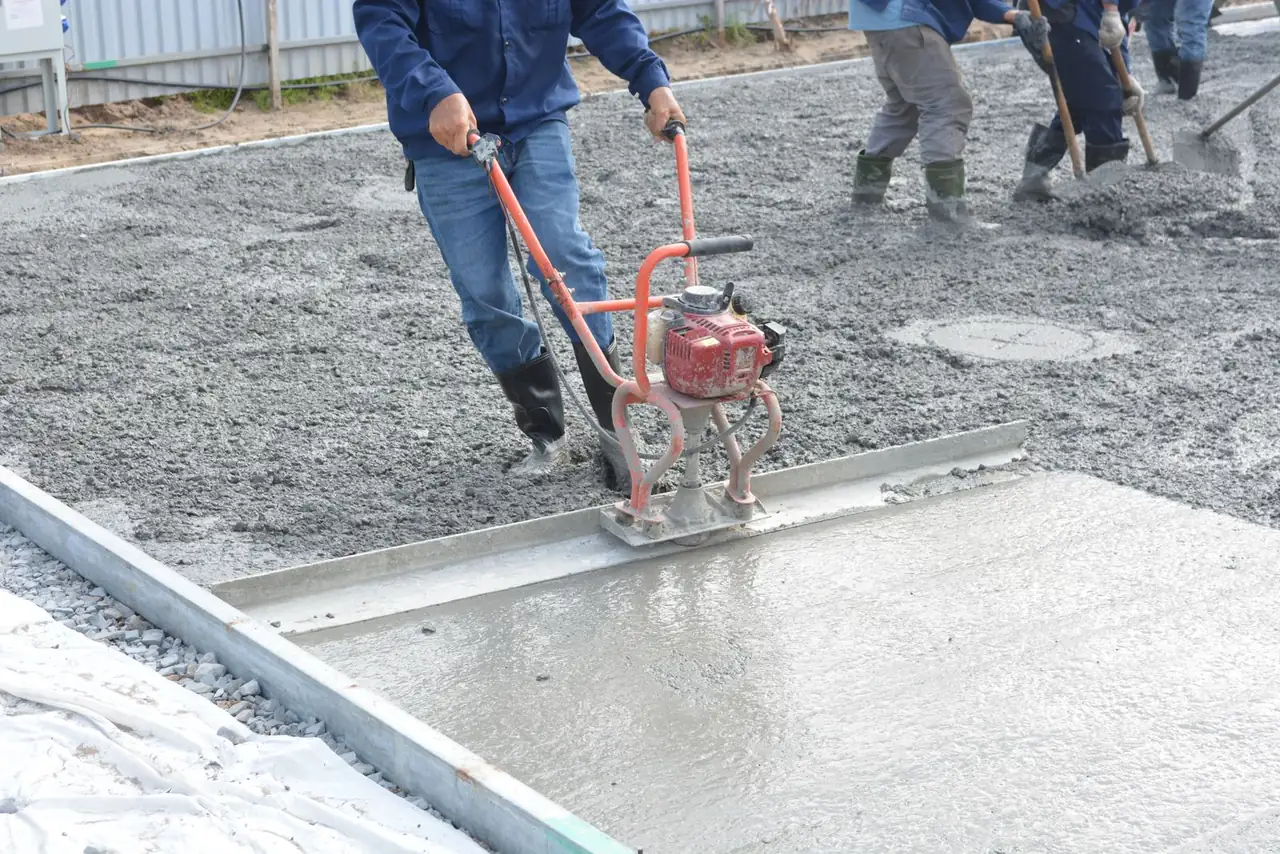
| Mixer with poker vibrator | Columns, beams and slabs | Vibration removes air pockets for stronger concrete |
How it works
- Tell us the pour date, site location, type of work and approximate volume of concrete.
- Get a quote with the daily or weekly rate, delivery and fuel terms.
- Prepare the site: a level, firm spot near the materials and water.
- Delivery the day before or the morning of the pour.
- Collection after the job, or extension if more pours follow.
How much concrete do you need?
Knowing the volume tells you the mixer size, the hire period and how many workers to book. Concrete is measured in cubic metres (m3): length x width x thickness.
| Element | Example size | Volume |
|---|---|---|
| Ground floor slab | 10 m x 12 m x 0.15 m | 18 m3 |
| Strip foundation | 50 m long x 0.6 m wide x 0.3 m deep | 9 m3 |
| Columns | 12 columns of 0.25 m x 0.25 m x 3 m | About 2.25 m3 |
| Ring beam | 50 m x 0.2 m x 0.3 m | 3 m3 |
Add a small allowance for waste and uneven ground. Your engineer's drawings or bill of quantities give the exact figures and the mix to use, and from those we can work out how many bags of cement and loads of sand and aggregate to order.
Which jobs suit mixer hire
- House foundations and ground slabs, poured over one or two days.
- Columns and ring beams, poured in several small batches over a week, where weekly hire works out cheaper.
- Suspended slabs on storey houses, where a continuous pour with an operator gives the best result.
- Extensions and upper floors in built-up areas such as Kimironko, Remera or Gikondo, where ready-mix trucks struggle to park.
- Fences, drainage channels, steps and paving, where small volumes are spread over several days.
Mixer or ready-mix?
| Hired mixer, site mixed | Ready-mix truck | |
|---|---|---|
| Best for | Foundations, columns, small and medium slabs | Large slabs and big continuous pours |
| Site access | Works on narrow and steep plots | Needs truck access, sometimes a pump |
| Control | You control timing and batches | Concrete arrives mixed to order |
| Watch out for | Accurate batching and enough workers | Delays in traffic, minimum order sizes |
Many houses in hilly areas such as Kagarama, Rebero or Nyamirambo suit site mixing because trucks cannot reach the plot easily.
Plan your pour
A good pour depends on preparation more than on the machine.
- [ ] Formwork and props checked, firm and clean
- [ ] Steel fixed, with spacers to keep the right cover, checked by the engineer
- [ ] Cement, sand and aggregate on site in the right quantities. See building materials in Kigali
- [ ] Water available on site, with storage if supply is unreliable
- [ ] Enough workers to batch, carry, place and vibrate without stopping
- [ ] Gauge boxes or buckets for measuring materials by volume, not by shovel count
- [ ] Plastic sheets or wet sacks ready for curing and for rain
- [ ] Inspection booked if your project needs one before the pour
Getting good, safe concrete from a mixer
- Batch consistently. Use the mix your engineer specifies and measure every batch the same way.
- Do not add extra water to make concrete easier to place. It makes it weaker.
- Mix long enough for an even colour, usually a few minutes per batch.
- Pour continuously across a slab so there are no weak joints.
- Vibrate columns and slabs to remove trapped air.
- Cure by keeping the concrete damp for several days.
Rainy season pours
Rwanda's rainy seasons run from March to May and September to December. Check the forecast, start pours early in the day, keep cement bags covered and off the ground, and have sheeting ready to protect fresh concrete if a storm arrives. Heavy rain on fresh concrete washes out cement from the surface and weakens it.
Safety around mixers
- Keep hands and tools out of the drum while it turns.
- Switch off before cleaning.
- Wear gloves, boots and eye protection: wet cement burns skin.
- Place the mixer on firm, level ground away from trench edges.
Book a mixer
Tell us your pour date and site using the form and we will confirm availability and price. Need other machines? See construction equipment hire in Kigali. Planning a full build? See our construction services.
Frequently asked questions
What size of concrete mixer do I need?
It depends on how much concrete you need per day and how fast you can feed and place it. Small drum mixers suit repairs and small pours; larger diesel mixers suit slabs and foundations. Tell us the volume and we will advise.
Is fuel included?
It depends on the hire terms. Some rates include fuel and others are dry hire where you pay for what you use. Your quote states which, so you can compare offers fairly.
Can I hire a mixer for one day?
Yes. Daily hire is common for a single slab or foundation pour. If you have several pours over a week or two, weekly hire is cheaper per day and removes the pressure to finish in one day.
How much does concrete mixer hire cost in Kigali?
The price depends on the mixer size, hire period, operator, fuel terms and delivery distance. Contact us with your pour date, location and volume for a current quote, and we will suggest the most economical hire period.
Mixer or ready-mix concrete, which is better?
Site mixing with a hired mixer suits most house foundations, columns and small slabs, especially on plots with difficult access. Ready-mix delivered by truck can suit large slabs on sites with good road access. We can help you compare both.
Should I pour concrete in the rainy season?
You can, with care. Avoid pouring in heavy rain, have plastic sheets ready to cover fresh concrete, and keep cement and sand dry. Rwanda's main rains fall from March to May and September to December.
How long should concrete be cured?
Keep fresh concrete continuously damp for several days after pouring, by spraying water or covering it with wet sacks or plastic. Your engineer will specify curing time and when slab props can be removed.