

Every new building in Kigali needs approval before work starts. This guide explains how to get a building permit in Kigali as of October 2026: which system to use, what your project category means, the document checklist, the official fees, inspections during construction, the occupancy permit at the end, and the delays that catch most applicants.
One important update first. The old BPMIS website (bpmis.gov.rw) has been replaced by Kubaka (kubaka.gov.rw), launched by the Ministry of Infrastructure on 29 April 2025. Kubaka is officially BPMIS version 2.0, so many people and professionals still call it "BPMIS". The rules behind it have not changed.
Step 1: Know your plot and its zoning
Before any drawings, confirm three things about your land:
- Ownership: a land title or lease contract with its UPI (Unique Parcel Identifier). Kubaka checks this automatically against the land information system (LAIS).
- Zoning under the Kigali Master Plan 2050: the master plan, launched in September 2020, groups housing into five residential zones. What you can build depends on the zone.
- Physical plan status: in residential zones you can only obtain a permit once the area's physical plan (roads, water and other basic infrastructure) is approved. The City of Kigali approves new residential sites in phases, and in January 2026 reported that only 37 percent of plots in approved physical plans had been developed.
| Zone | What is normally allowed | Notable restriction |
|---|---|---|
| R1 low density | Single-family homes | Apartments not permitted |
| R1A | Single-family, semi-detached, townhouses, apartments | Industrial uses prohibited |
| R1B compact rural | Single and multifamily houses linked to farming areas | Industrial uses prohibited |
| R2 | Row housing, apartments, upgrading of unplanned areas | Single-family houses prohibited |
| R3 | Row houses, apartments, multifamily, affordable housing | Single-family houses prohibited |
| R4 high density | Medium-rise residential with mixed uses | Industrial uses prohibited |
Uses that fall outside the normal zoning, such as a shop or school in a residential area, need a conditional land use permit. As of mid-2026 these are only issued after the Rwanda Housing Authority (RHA) gives a No Objection, which adds time.
Standard residential plots are about 300 m2, but officials have said smaller plots (around 100 m2 in R1A, R1B and R3, 120 m2 in R2) can be permitted depending on the zone.
Step 2: Find your building category
Rwanda classifies buildings into categories under Ministerial Order No. 02/CAB.M/019 of 15 April 2019. The category decides which documents you need, whether inspections are mandatory and the size of any fines. Categories 1 and 6 generally do not need a building permit.
| Category | Typical example | What it means for you |
|---|---|---|
| 2 | Small house or shop under 200 m2, single storey | Simpler file; no geotechnical report or EIA normally needed |
| 3 | Medium residential or commercial up to 1,500 m2 and two storeys | Certified architect or engineer required; mandatory foundation inspection |
| 4 | Larger multi-storey buildings and towers | Full technical file; Green Building Minimum Compliance System mandatory |
| 5 | Hospitals, schools, industrial buildings, more than 500 people | Full technical file, EIA, supervision by certified firms |
Most family houses in Kigali fall into Category 2 or 3. A storey house over 200 m2 is usually Category 3.
Step 3: Prepare the documents (checklist)
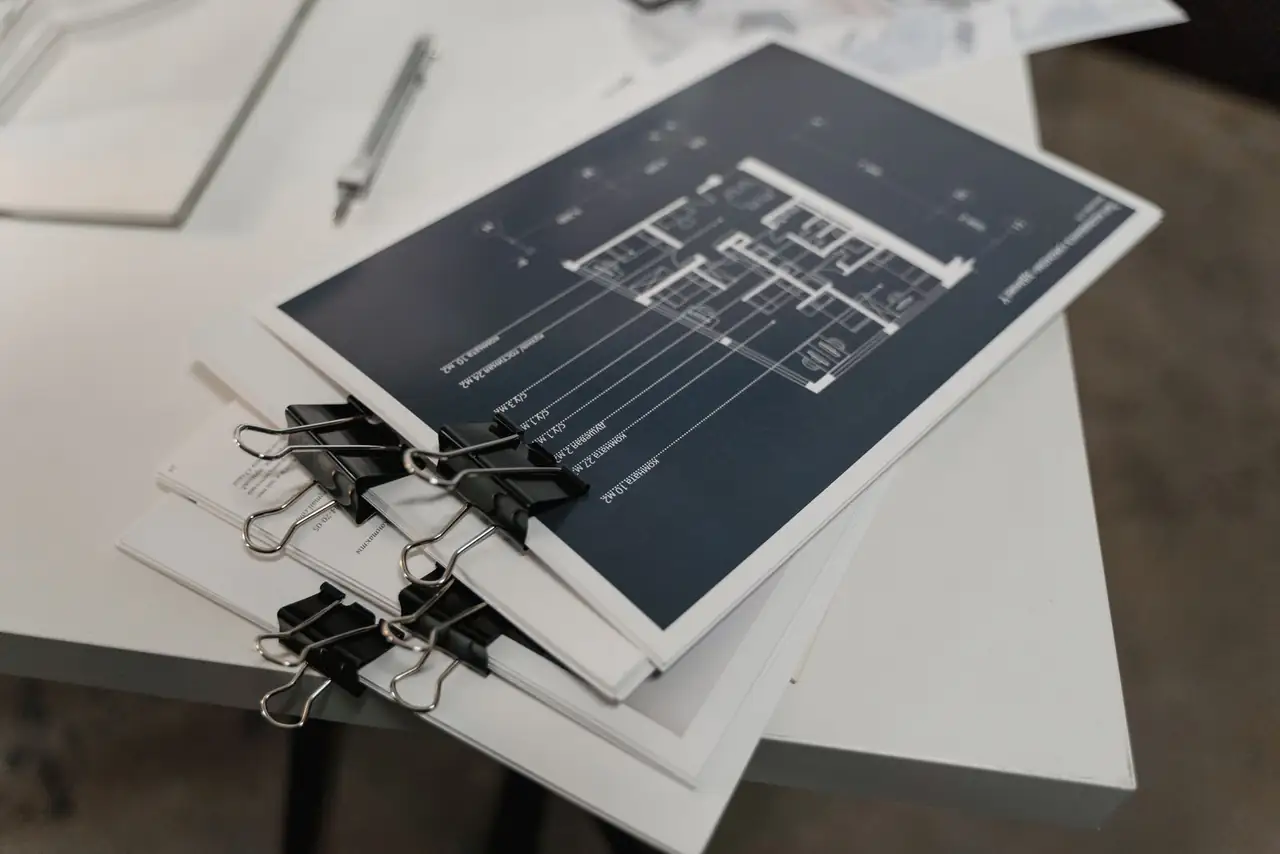
The City of Kigali One Stop Centre checklist lists what a construction permit application contains. All drawings must be prepared by professionals registered with the Institution of Engineers Rwanda (IER) or the Rwanda Institute of Architects (RIA); Kubaka checks their licences online. Requirements depend on category, so treat this as a working checklist and confirm on Kubaka before you submit.
- [ ] Completed online application form (project, developer, plot and cost data)
- [ ] Land title or lease contract
- [ ] Proof of property tax payment for the current year
- [ ] Location maps showing the plot on the master plan and zoning plan
- [ ] Site analysis (slope, roads, existing services, nearby wetlands or protected areas)
- [ ] Design report describing the project and how it meets zoning rules
- [ ] Site plan with setbacks, parking, access and drainage
- [ ] Architectural drawings: plans, sections and elevations
- [ ] Structural drawings and calculations
- [ ] Plumbing, drainage, storm water and rainwater harvesting details
- [ ] Electrical and, where relevant, mechanical drawings
- [ ] Fire and safety measures plan
- [ ] Bill of quantities and cost estimate
- [ ] Geotechnical (soil) report, except Categories 2 and 3
- [ ] Environmental Impact Assessment certificate or clearance from RDB, except Categories 2 and 3
- [ ] Landscape plan for large sites, steep slopes (over 20 percent) or plots near wetlands and green corridors
Our architecture and design team prepares permit-ready drawing packages to this list.
Step 4: Apply on Kubaka and pay the fee
- Create an account on kubaka.gov.rw and enter the plot UPI. Zoning information is pulled in automatically.
- Optional pre-consultation: you can ask the One Stop Centre to review your concept before full drawings. It is free, and recommended for sites over 1 hectare, slopes above 30 percent, plots next to wetlands, river banks, forests or the BRT corridor, and heritage areas.
- Upload the documents and submit. The technical assessment only starts once the file is confirmed complete.
- Pay the fee through IremboPay.
- Answer reviewer comments quickly. Each round of resubmission adds days.
- Download the permit once approved.
Official permit fees (as of October 2026)
| Floor area of the building | Fee |
|---|---|
| Up to 100 m2 | RWF 20,000 |
| Over 100 m2 to 200 m2 | RWF 100,000 |
| Over 200 m2 to 500 m2 | RWF 150,000 |
| Over 500 m2 | RWF 200,000 |
These rates come from the Presidential Order published on 4 December 2023 and also apply to permit renewals. In September 2025 Parliament ordered the City of Kigali to refund about RWF 177 million that had been overcharged through the old BPMIS, so check that the amount you are billed matches the table.
After approval: inspections and occupancy
Step 5: Build, with inspections
The permit is not the end of the process. According to the City of Kigali, the Rwanda Building Code requires every building under construction to be inspected from foundation to completion.
- Foundation inspection: mandatory for Categories 3, 4 and 5 before you build above the foundations. Request it through Kubaka; the City says applicants get feedback within three days. Skipping it carries fines from RWF 300,000 (Category 3) up to RWF 2 million (Category 5).
- Stay on the approved design. Changing the design without a modification permit is fined from RWF 50,000 (Category 2) to RWF 2.5 million (Category 5).
- Keep the permit valid. Works must start within two years of issue, otherwise the permit expires unless renewed.
Step 6: Apply for the occupancy permit
When the building is finished, apply for an occupancy permit before anyone moves in or opens for business. The 2015 ministerial order lists the core requirements:
- as-built architectural plans;
- proof the electrical installation was verified by certified electricians;
- compliance with fire prevention rules.
Irembo lists the processing time as 30 days, and the fee depends on the case. Using a building without an occupancy permit is fined RWF 500,000 for Category 3 and RWF 2 million for Category 4.
Other permit types: renovations, extensions and demolition
Kubaka handles more than new buildings. Each of these needs its own application:
- Extension: adding rooms or floors; needs drawings and a structural design.
- Refurbishment with structural alterations: changes to walls, columns or slabs; needs a structural modifications report.
- Refurbishment without structural alterations: mainly services and finishes.
- Change of use: for example turning a house into offices; must fit the zoning.
- Demolition: full or partial, with a plan for handling the waste.
- Fences and temporary structures: also listed as services on Kubaka.
Renovating without a permit is fined from RWF 300,000 for Category 2 buildings up to RWF 7 million for Category 5.
Common causes of delay and how to avoid them
| Cause | How to avoid it |
|---|---|
| Incomplete or inconsistent technical documents | Use the latest checklist; make sure plot size and drawings match the title |
| Design breaks zoning, setbacks or plot coverage | Check zoning and coverage rules before design starts |
| No approved physical plan for the area | Confirm physical plan status before buying land |
| Conditional land use needed | Allow extra time for the RHA No Objection |
| Slow answers to reviewer comments | Have your architect respond within a day or two |
| Missing rainwater harvesting details | Show roof catchment, tank size and calculations in the drawings |
Get help with your permit
We can prepare the drawings, compile the file and follow the application on Kubaka with you. Send your plot details using the form. Planning the budget too? Read how much it costs to build a house in Rwanda, or see how our construction services take a project from permit to handover.
Frequently asked questions
Where do I apply for a building permit in Kigali?
Online through Kubaka (kubaka.gov.rw), the upgraded Building Permit Management Information System launched in April 2025 to replace the old BPMIS. Applications are assessed by the City of Kigali and district One Stop Centres, and payment is made through IremboPay.
How much is a building permit in Kigali?
The Presidential Order published in December 2023 sets RWF 20,000 for up to 100 m2 of floor area, RWF 100,000 for over 100 to 200 m2, RWF 150,000 for over 200 to 500 m2 and RWF 200,000 above 500 m2. The fee is based on the building's floor area, not the plot size.
How long does a building permit take?
The law says a complete file should be assessed within 30 days of being confirmed complete. In 2026 a Kibagabaga homeowner reported receiving his permit through Kubaka in 23 days, while others report about a month. Incomplete technical documents are the main cause of delay.
Do I need a permit for renovations?
Yes for most work. Extensions, refurbishment with or without structural alterations, change of use, demolition and even fences are permit types on Kubaka. Because even refurbishment without structural changes has its own permit type, check your case on Kubaka before starting work.
How long is a building permit valid?
Works must start within two years of the permit being issued, otherwise it expires unless you request and obtain a renewal. Continuing work on an expired permit can lead to fines from RWF 50,000 for small buildings up to RWF 2.5 million for the largest category.
What is an occupancy permit and do I need one?
An occupancy permit confirms the finished building matches the approved plans and is safe to use. You apply after completion with as-built drawings and proof the electrical installation was verified. Using a Category 3 building without one can bring a RWF 500,000 fine.
Can I build on a plot smaller than 300 m2?
Possibly. The standard residential plot is 300 m2, but City of Kigali officials have said plots of about 100 m2 in R1A, R1B and R3 zones and 120 m2 in R2 can get permits, provided the area has an approved physical plan.
What happens if I build without a permit?
Work is stopped and fined, from RWF 300,000 for a small Category 2 house up to RWF 7 million for Category 5 buildings. If the building also breaks zoning rules, demolition is ordered at the owner's cost.